
Now Reading: Michael Goodwin: Terrorism and Antisemitism Are Rising Worldwide and Zohran Mamdani Is Unprepared to Lead New York
-
01
Michael Goodwin: Terrorism and Antisemitism Are Rising Worldwide and Zohran Mamdani Is Unprepared to Lead New York
Michael Goodwin: Terrorism and Antisemitism Are Rising Worldwide and Zohran Mamdani Is Unprepared to Lead New York

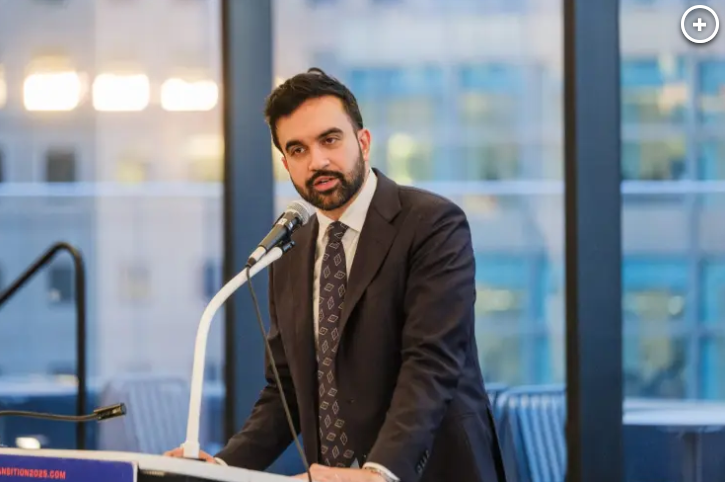
As terrorism and antisemitism surge globally, columnist Michael Goodwin argues that New York Mayor-elect Zohran Mamdani lacks the experience, judgment, and leadership needed to confront escalating security threats.
Even before a wave of violent incidents rocked the United States and the world, many New Yorkers were already anxious about the prospect of Zohran Mamdani becoming mayor. Recent events, however, have intensified those fears and, according to columnist Michael Goodwin, exposed how poorly suited Mamdani is to lead New York City at a time of growing global instability.
The brutal killing of Jewish civilians celebrating Hanukkah on a beach in Australia, an unresolved mass shooting involving students near Brown University, and the FBI’s disruption of an alleged terror plot in Los Angeles have all underscored the rising threat of extremism. Abroad, French authorities canceled the annual New Year’s celebration on the Champs-Élysées due to fears of violence linked to migrant gangs.
Goodwin stresses that Mamdani is not responsible for these atrocities. However, he argues that Mamdani’s record on Israel, policing, and immigration highlights a lack of readiness to address terrorism, antisemitism, and public safety as he prepares to take office on January 1.
The Australian attack, which left 15 people dead and dozens wounded, has been widely cited as a chilling example of what extremists mean when they call to “globalize the intifada.” According to Goodwin, such rhetoric is not about Israeli policy or a two-state solution but about the targeted killing of Jews worldwide.
Outgoing Mayor Eric Adams echoed that view, calling the Sydney attack a literal manifestation of globalized antisemitism. Adams has consistently defended Israel following Hamas’ October 7, 2023 attack and has warned that slogans used at pro-Palestinian rallies often function as direct calls to violence.
Mamdani’s own record on the issue has drawn scrutiny. During the campaign, he declined to condemn the phrase “globalize the intifada,” saying only that it was not language he personally uses. At the same time, he supports the BDS movement and has questioned Israel’s right to exist as a Jewish state, positions that critics say embolden extremists rather than confront antisemitism.
Following the Australian attack, Mamdani issued a statement expressing solidarity with Jewish communities and acknowledging widespread fear. While the statement was widely viewed as appropriate, Goodwin questions whether Mamdani has addressed the root cause of such violence, which he describes as enduring antisemitism rather than geopolitical conflict.
Goodwin also raises concerns about Mamdani’s inner circle. Activist Linda Sarsour, previously removed from the Women’s March leadership over antisemitic remarks, played a visible role in Mamdani’s campaign. Additionally, Mamdani selected Ramzi Kassem as chief counsel, a law professor who previously defended a convicted al Qaeda operative and has publicly accused Israel of ethnic cleansing.
Another transition adviser, democratic socialist Jack Gross, has a history of anti-police and anti-American rhetoric and is expected to advise on economic and workforce issues.
While Mamdani temporarily eased tensions with law enforcement by retaining NYPD Commissioner Jessica Tisch, Goodwin doubts the administration will continue policies that have reduced murders by more than 20 percent. Mamdani has opposed expanding the police force and has a documented history of supporting defund-the-police positions.
Goodwin warns that New York’s counterterrorism expertise, developed after 9/11 through coordination with federal and international agencies, could be undermined under a mayor skeptical of law enforcement. Recent cooperation between the FBI and LAPD to stop a New Year’s Eve bombing plot demonstrates the importance of proactive policing, he argues.
The unresolved shooting near Brown University further highlights failures in campus security and law enforcement transparency, areas Goodwin believes New York must not allow to deteriorate.
With antisemitism rising, terror threats evolving, and public safety at stake, Goodwin concludes that New York cannot afford leadership that is ideologically driven, inexperienced, or hostile to the institutions tasked with protecting the city.